FLOATING FIELD HOUSE
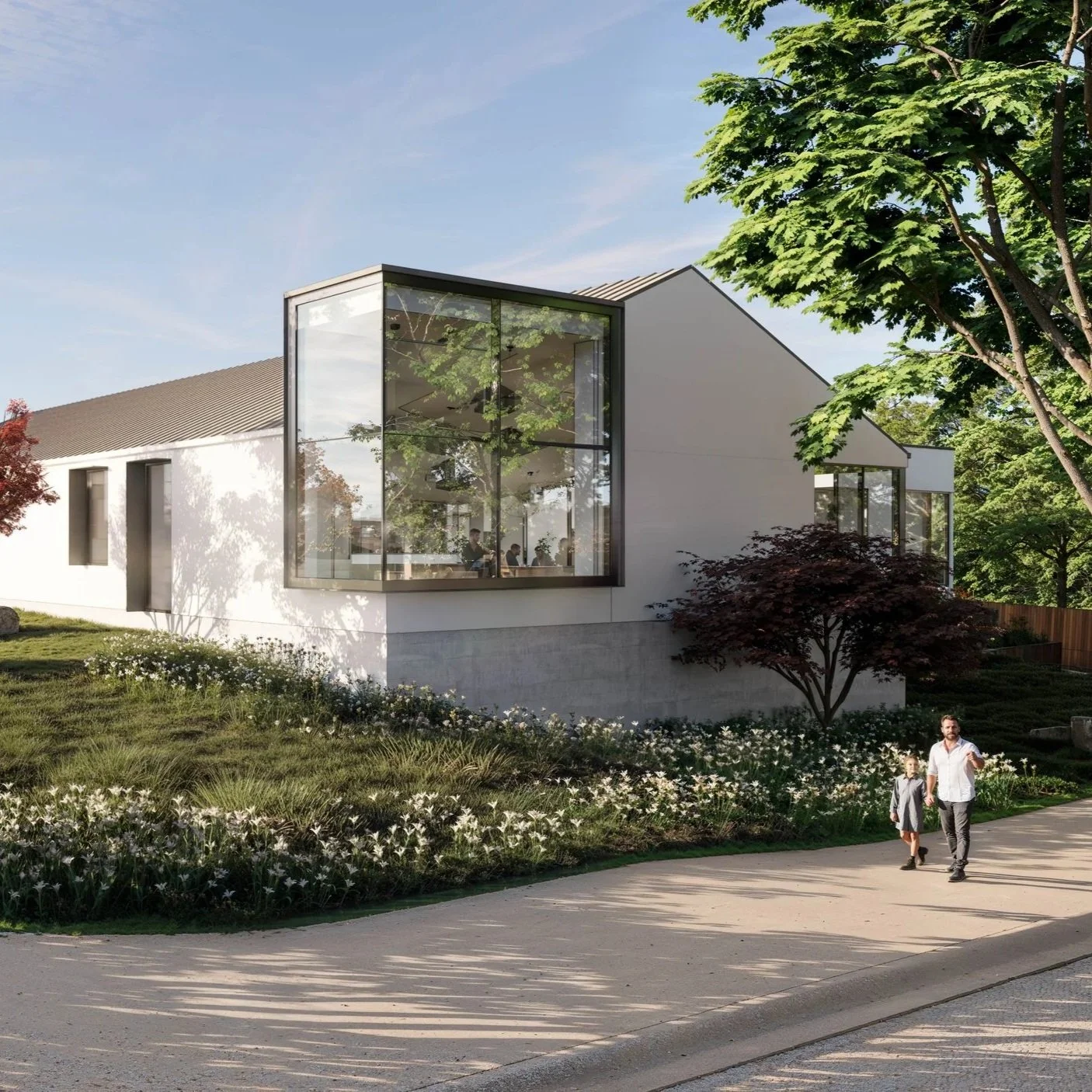
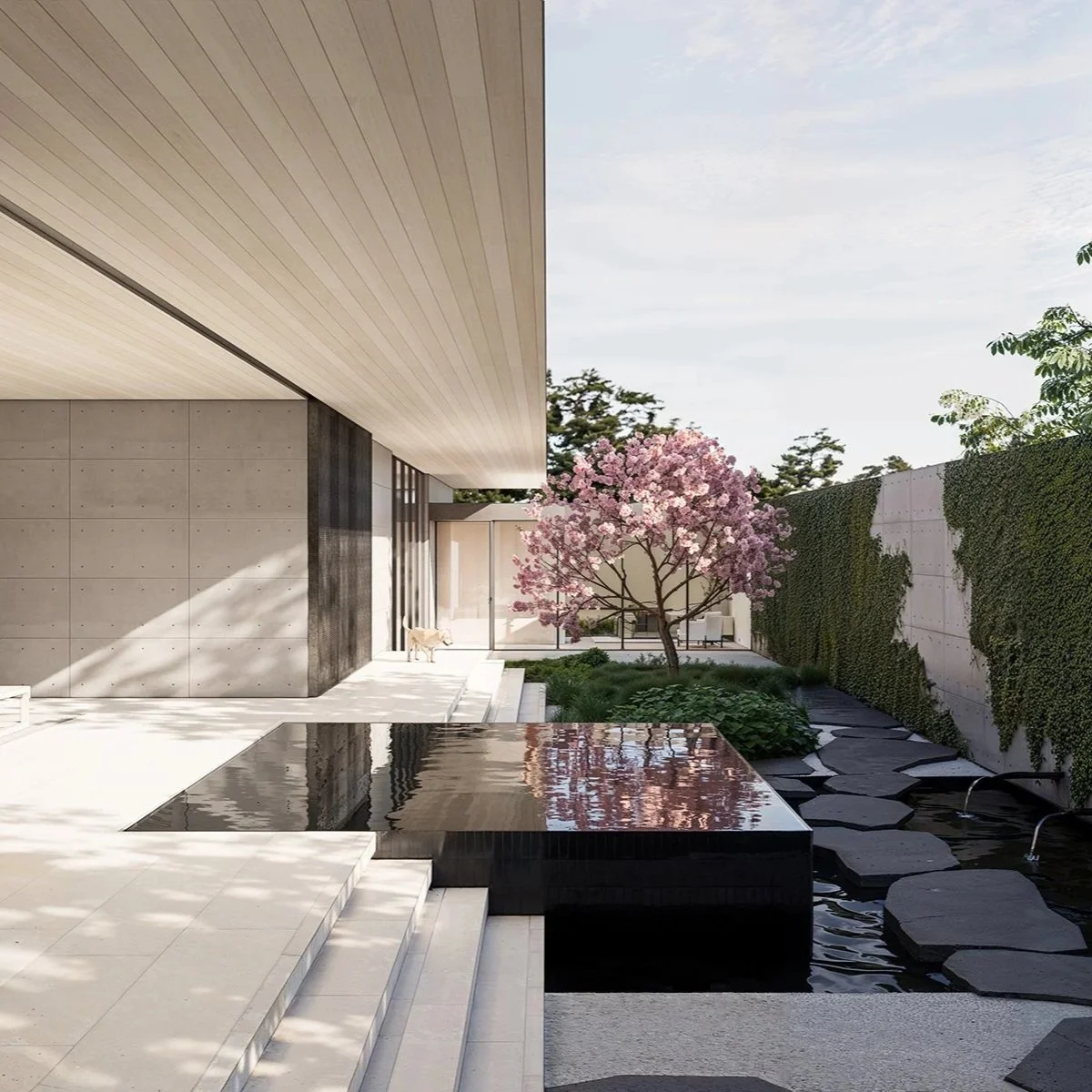
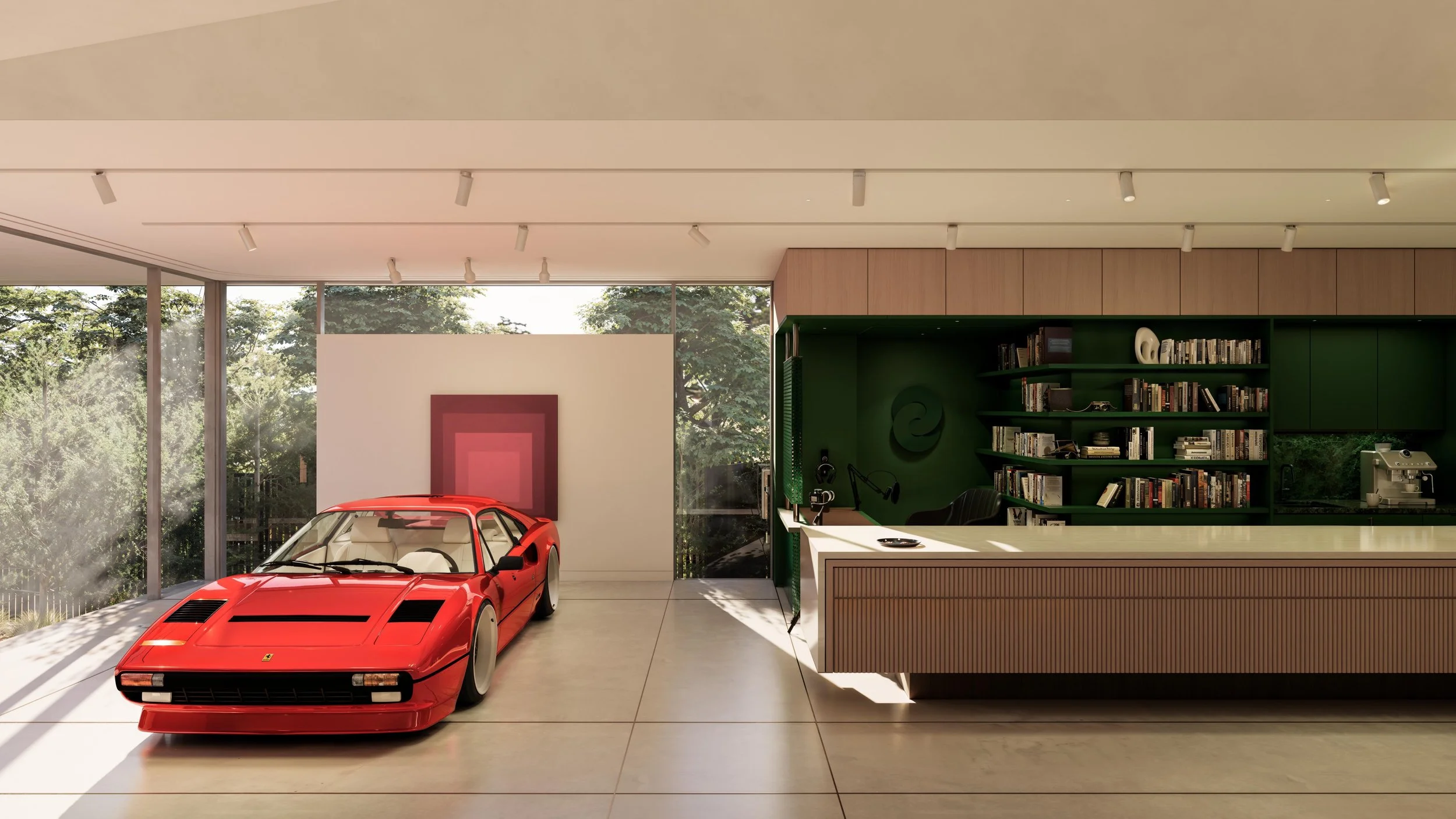
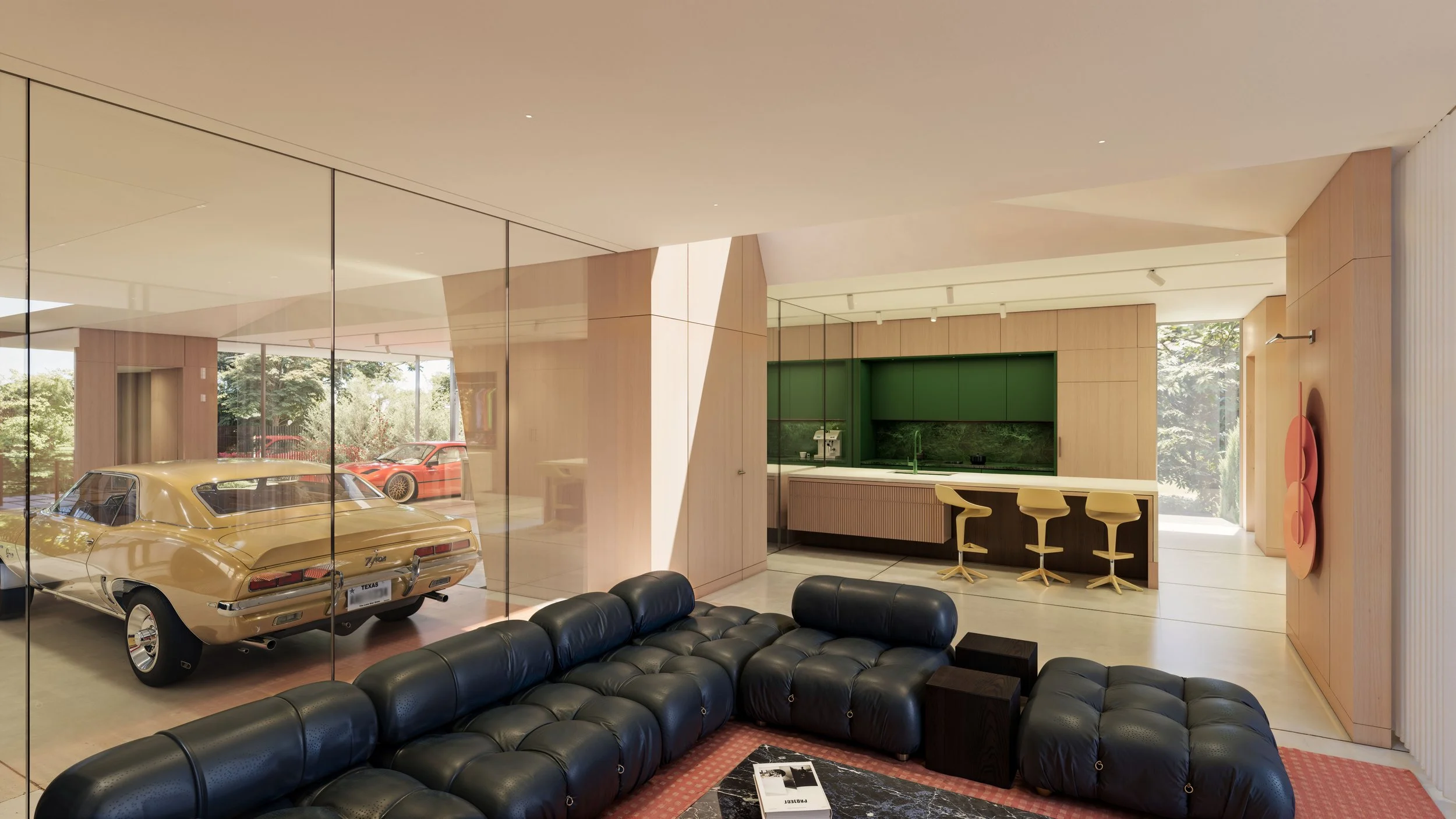
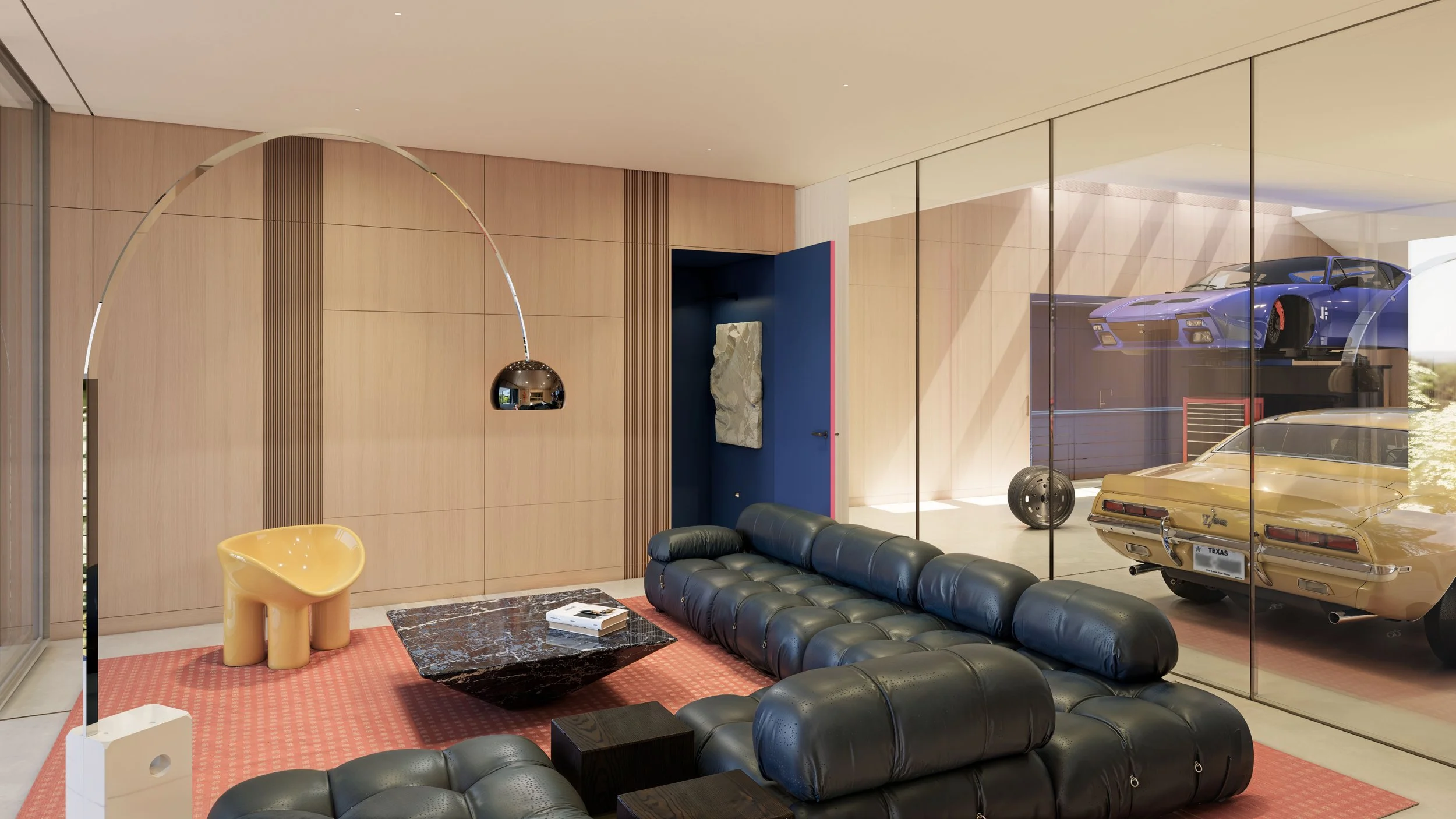
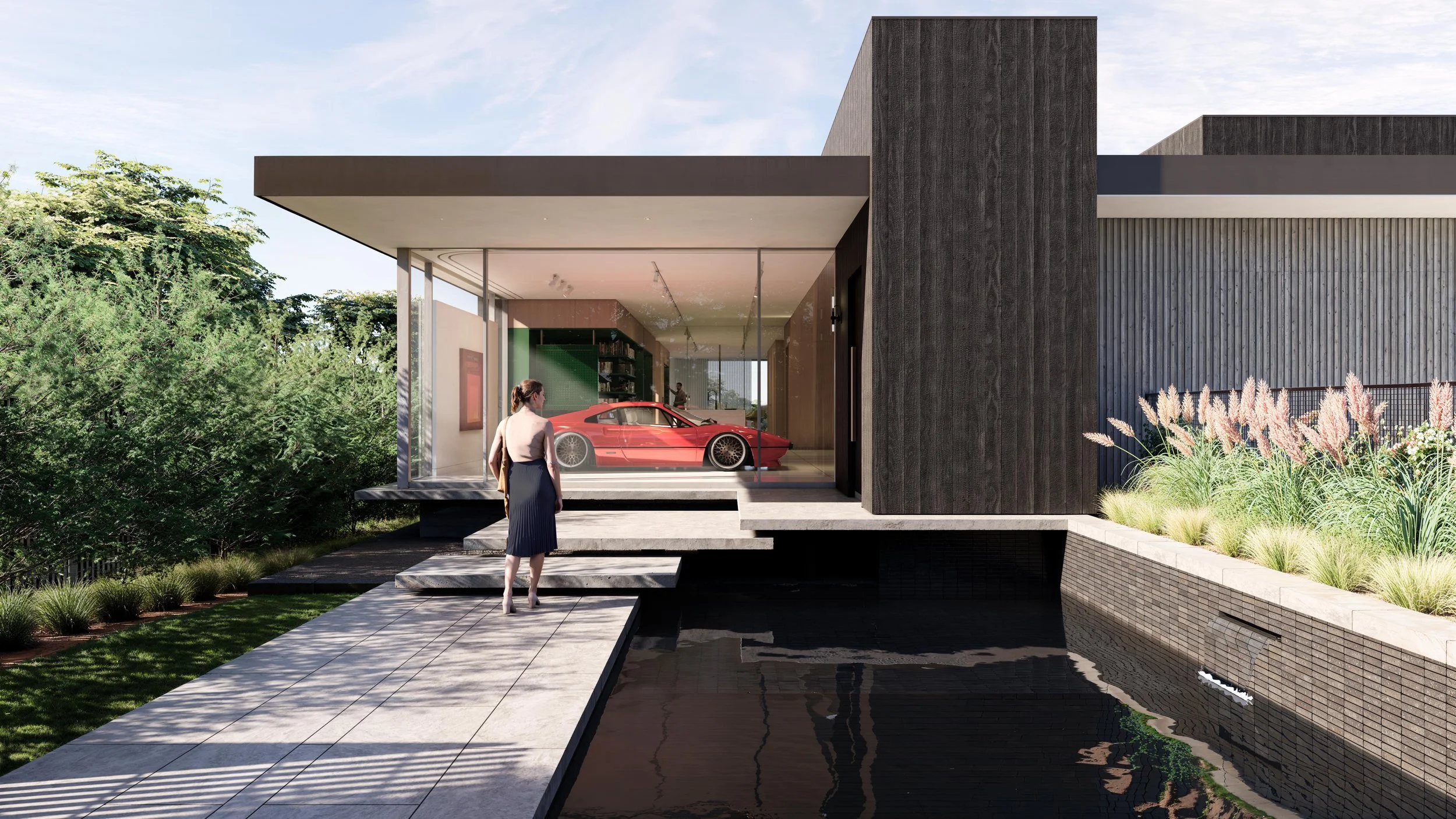
The Floating Field House is conceived as a dynamic reinterpretation of domestic spatial organization — not as a collection of compartmentalized rooms, but as an expansive open field of interconnected life, work, and craft. The design dissolves conventional programmatic boundaries so that the garage, workshop, home office, and living spaces do not sit side-by-side but flow seamlessly into one another, fostering unexpected overlaps and moments of discovery.
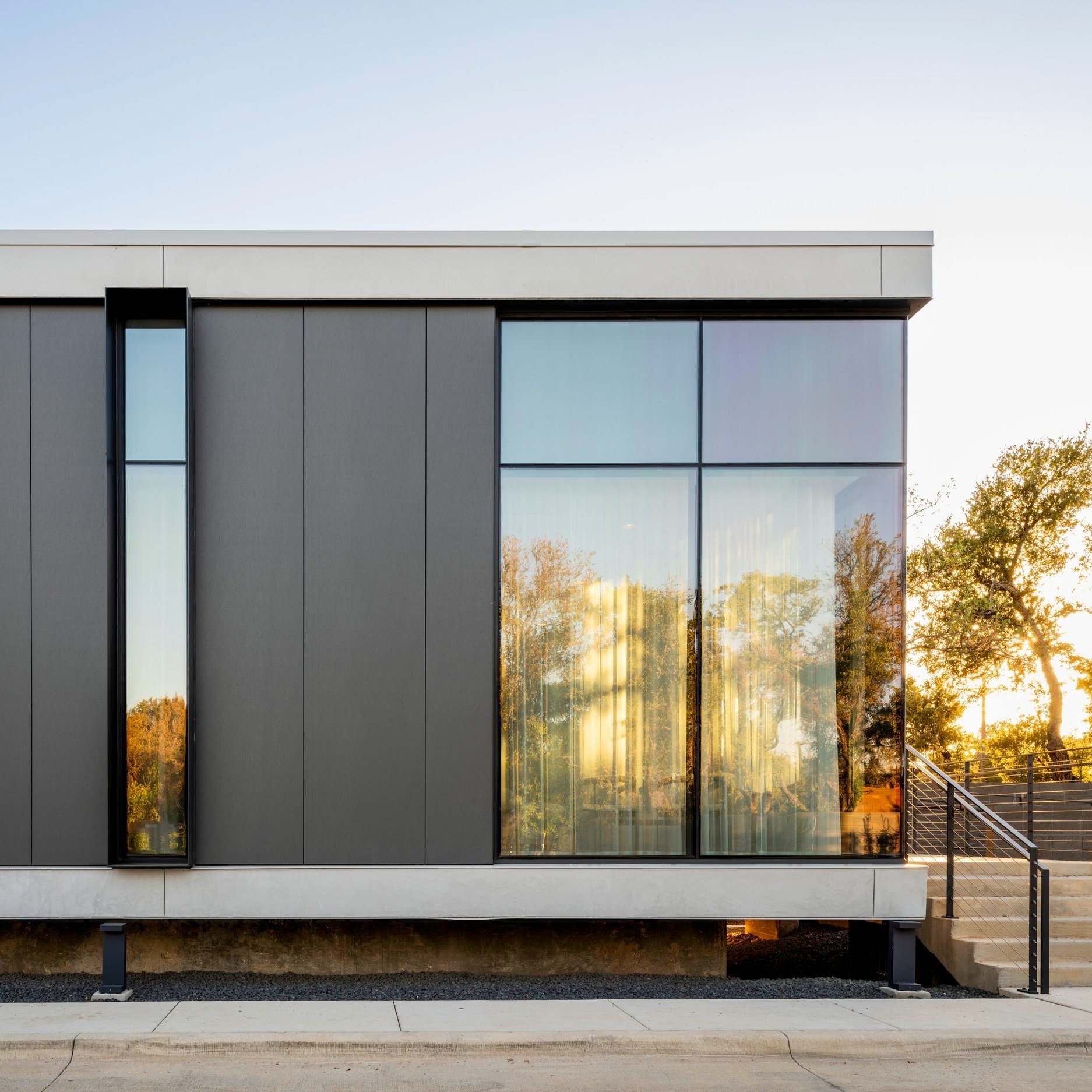
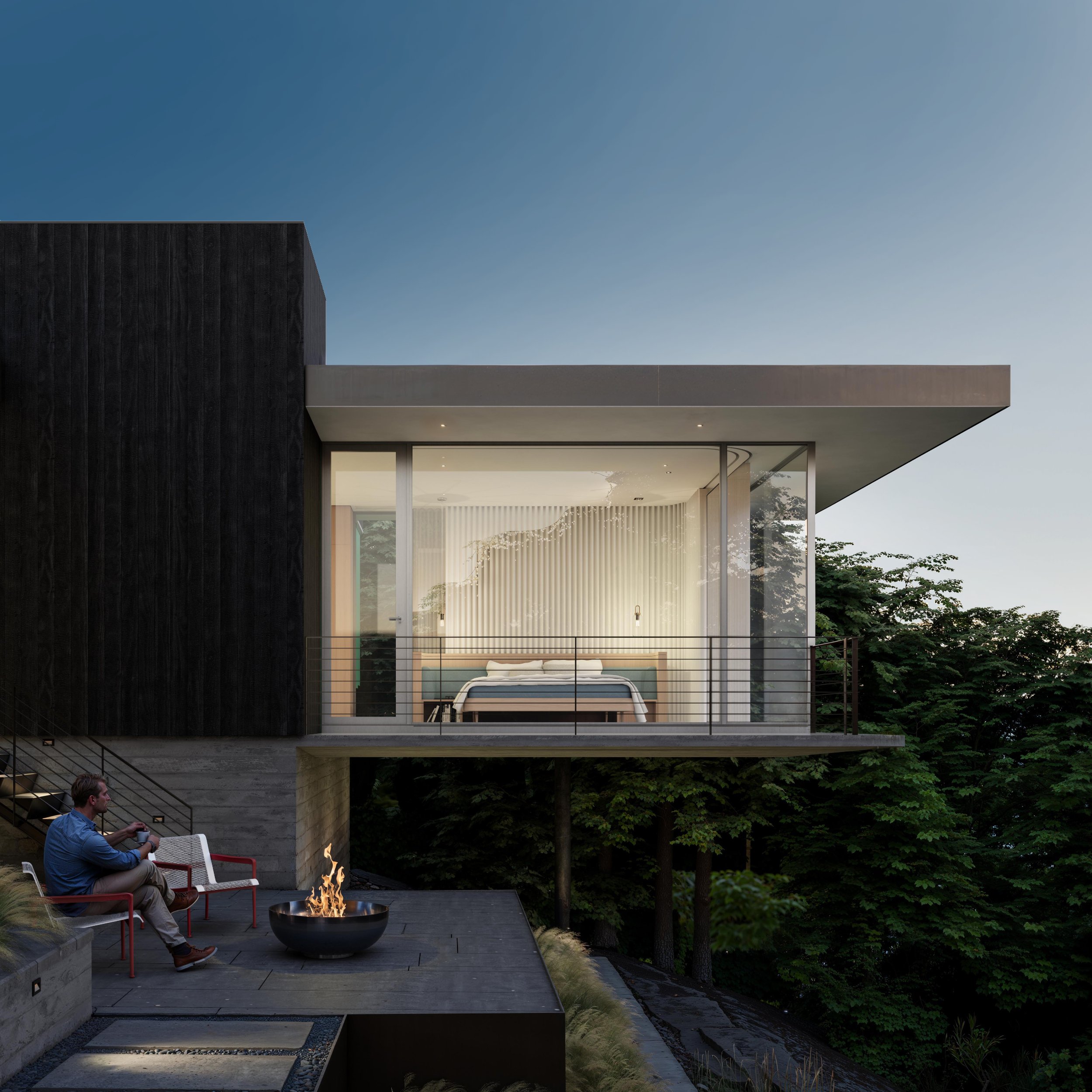
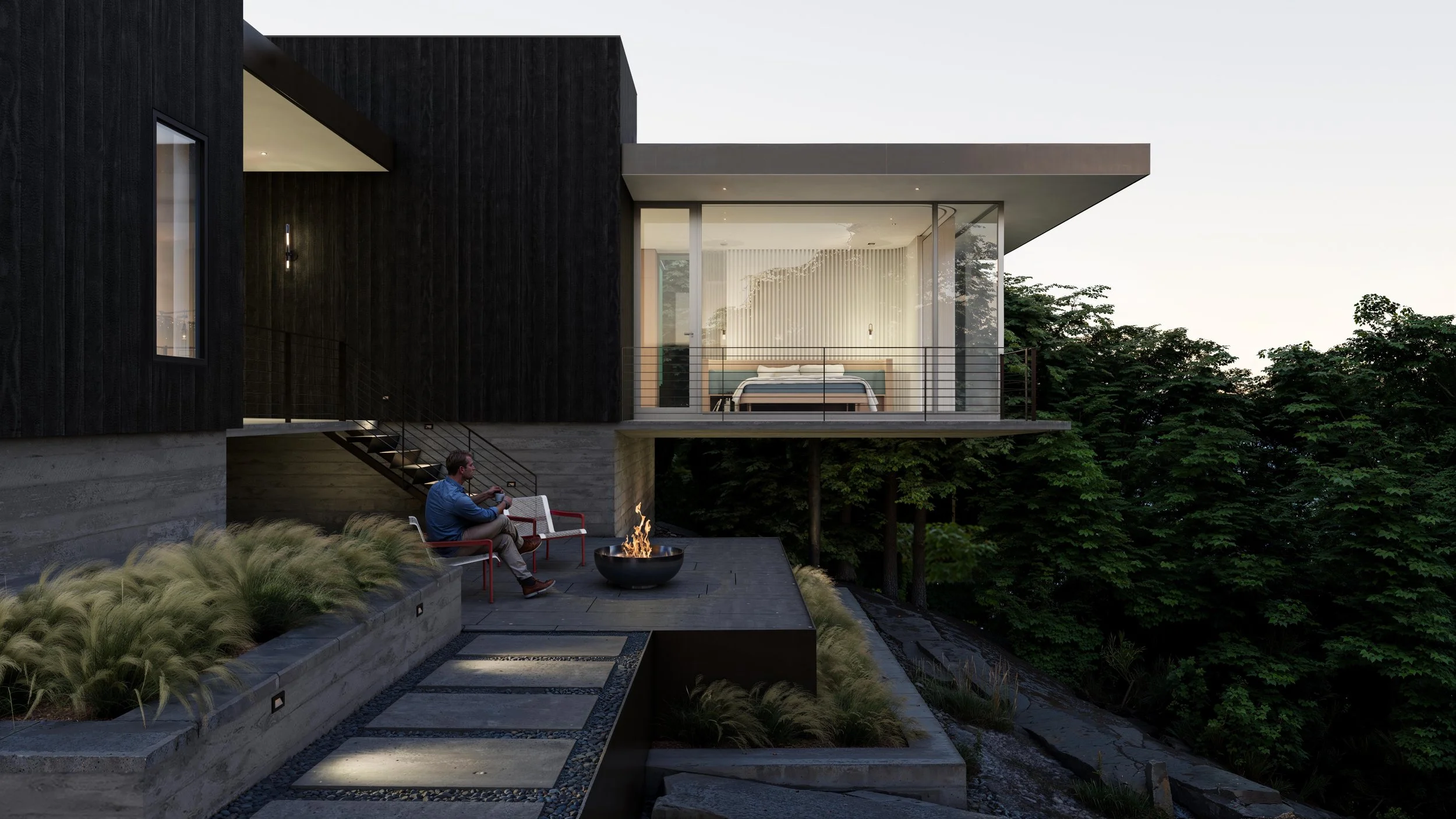
Raised above the flood plain, the house’s horizontal field of activities floats above the landscape, supported by a sequence of robust, dark-clad vertical masses that anchor the composition to place and ground it structurally. These mass elements act both as functional anchors and tectonic moments within the field — housing infrastructure, storage, and vertical organization — while visually lifting the open living plane above seasonal waters and site constraints.
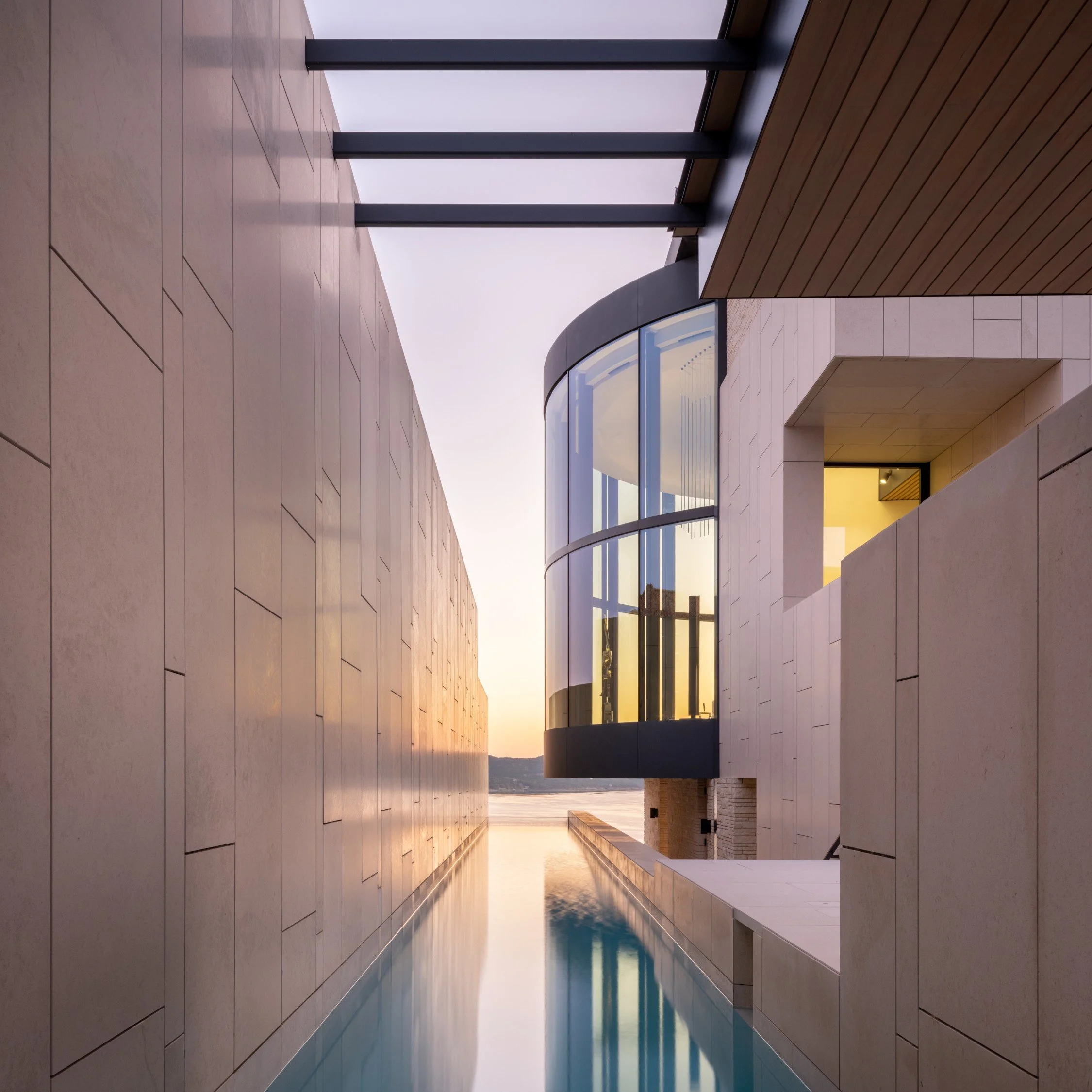
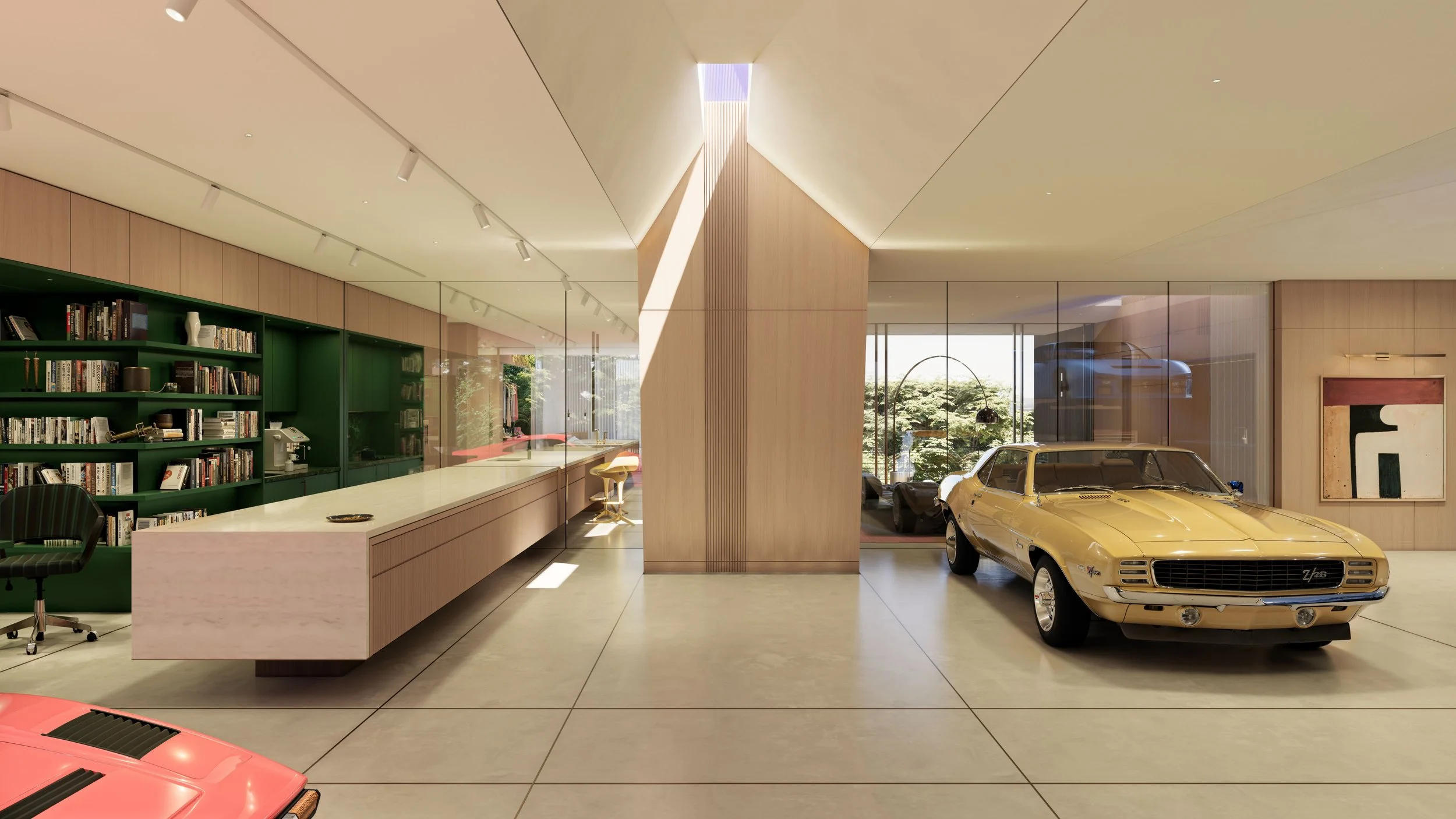
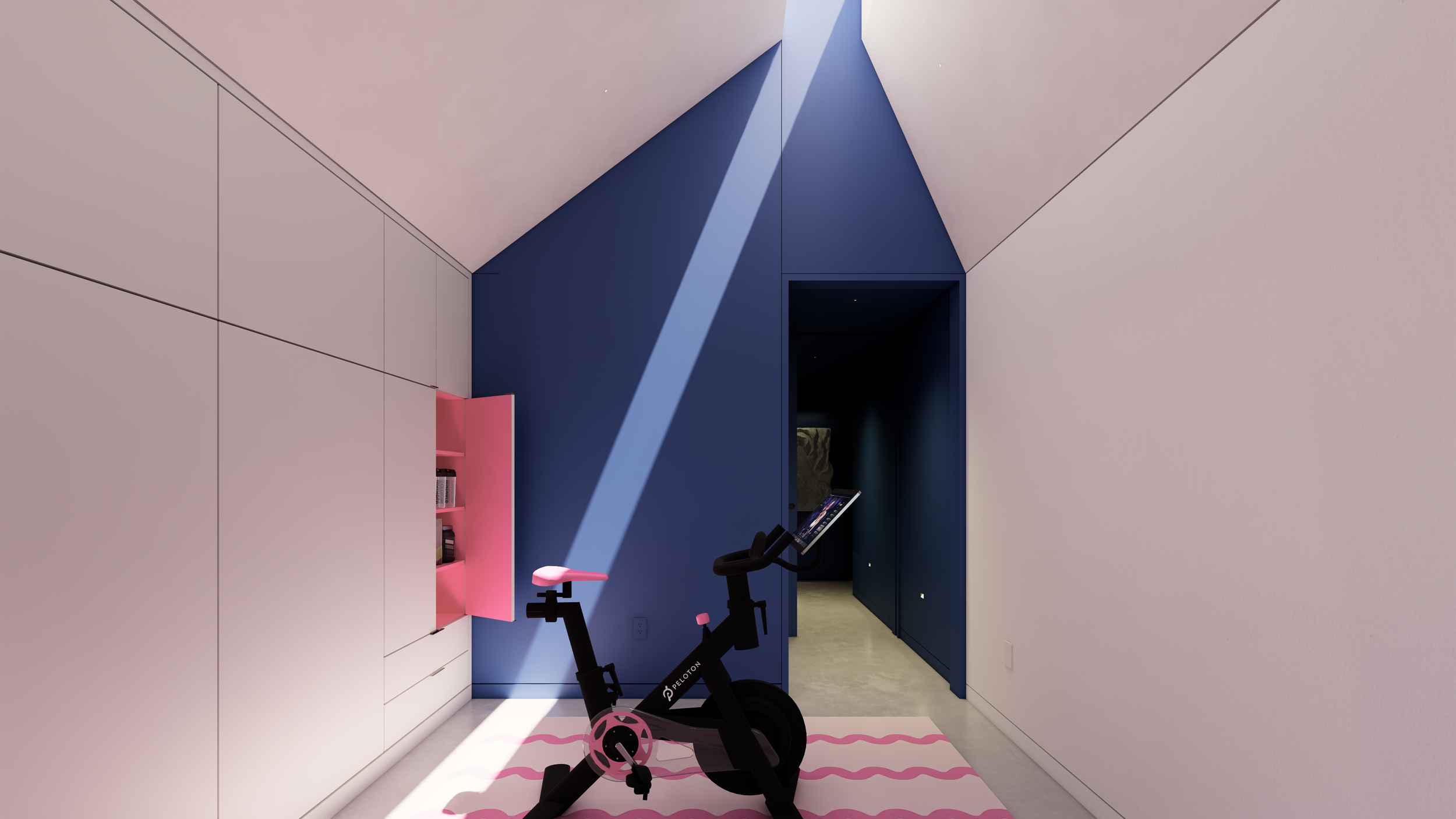
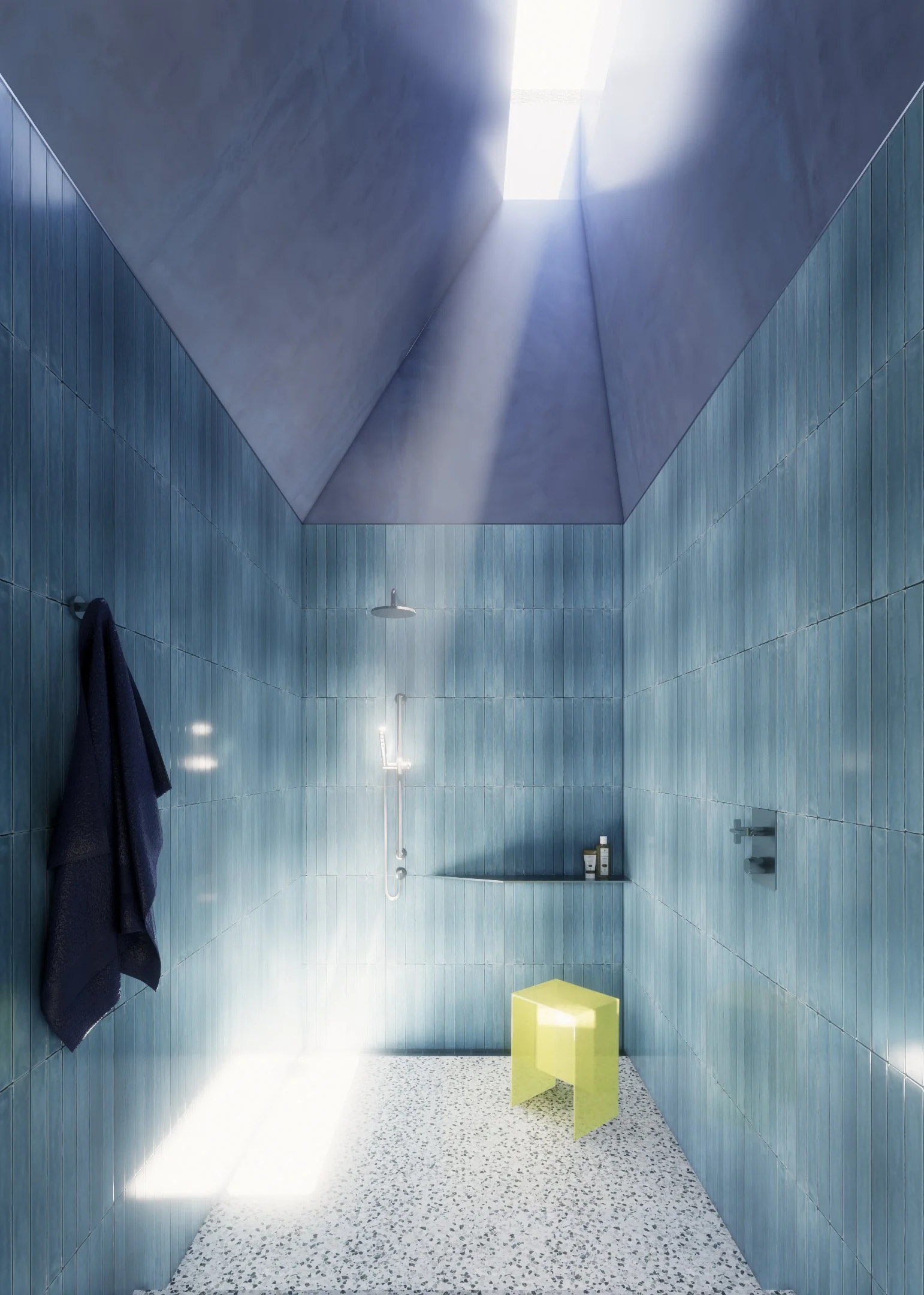
Rather than concealing its structural support, the design expresses the vertical masses as sculptural components, their dark materiality contrasting with the lightness of the elevated field above. Within these masses, thresholds open up unexpectedly to the sky through carefully composed skylights. These openings puncture the grounded volumes, bringing daylight deep into the core of the house and creating internalized outdoor moments that blur the boundary between interior and exterior. The effect is a choreography of light that animates spaces of work and repose, forging connections between the grounded and the airborne, the enclosed and the open.
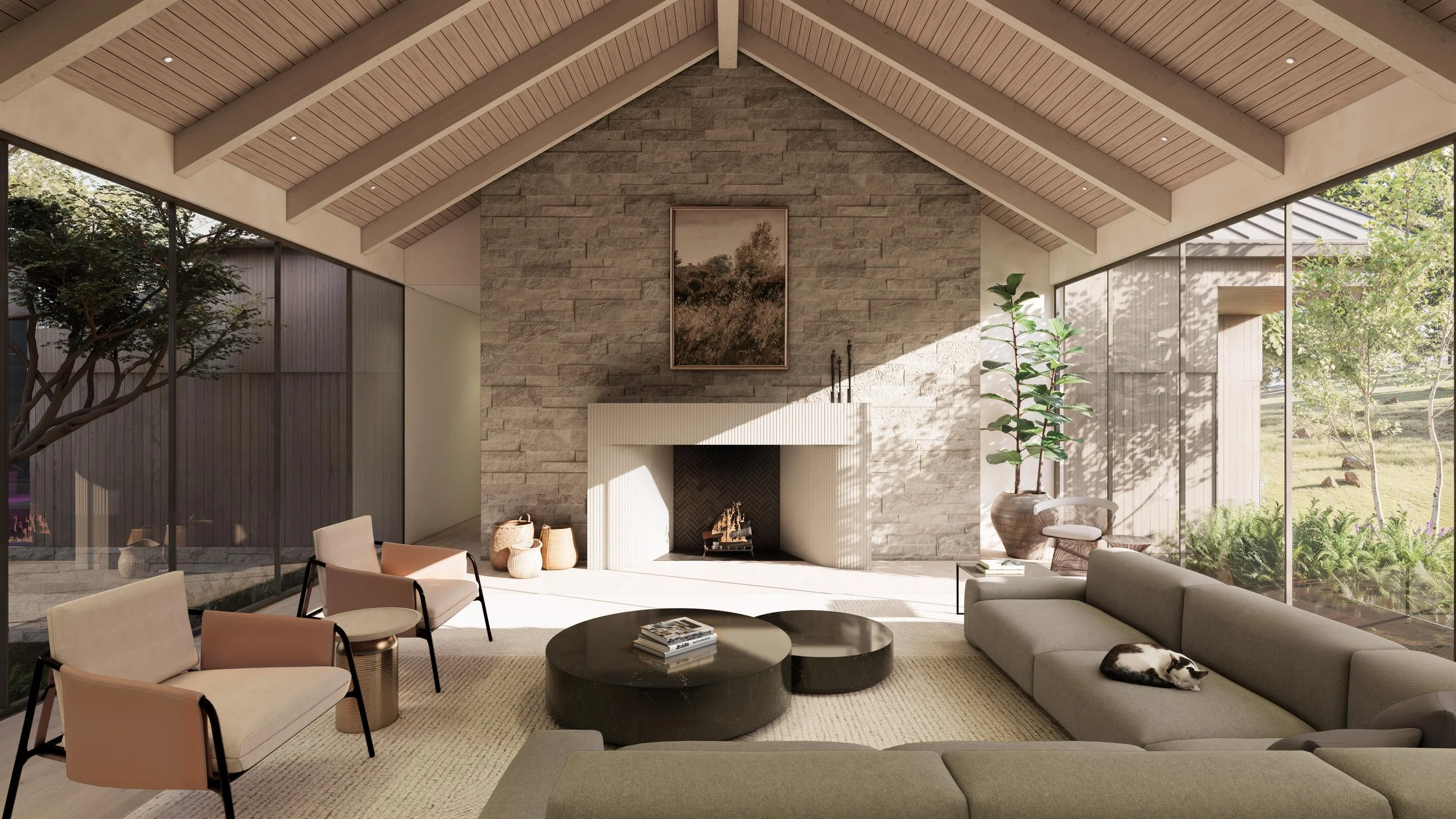
At the human scale, the field becomes a continuous spatial landscape — allowing daily rituals to occur along a spectrum rather than within isolated boxes. Workbench, living room, kitchen, and office become points within a continuous spatial and visual field, where activities overlap and inform one another.
This project is an exercise in disciplined materiality, where a restrained palette becomes the backdrop for deliberate moments of saturated color. Each chromatic accent is carefully placed to articulate function—quietly signaling points of interaction and revealing playful shifts in tone and texture as one moves through the space.
Across the interior, small color gestures intentionally leap across the wheel, subtly recalibrating the perception of the whole. These calibrated contrasts enrich the spatial rhythm without overwhelming the architectural clarity. A defining move occurs at the building envelope: the exterior’s charred shou sugi ban cladding dissolves at the glass line, giving way to warm, lightly stained wood millwork within. This transition reinforces the home’s sense of refuge while maintaining a cohesive material language from outside to inside.
Color continues to operate as a functional guide—infusing the kitchen, the garage workspace, and other high-use areas with identity and purpose. Textures and materials are paired to underscore the tactile and performative qualities of each space, such as the dialogue between the kitchen countertop and its complementary backsplash.
Location: Austin, Texas | Phase: Design 2024 | Architecture & Interior Design Team: Sarah Johnson, Matt Fajkus, Andrea Alvarez Barrios, Billy Del Monte, Alyson Beaton